The walk from Phakding to Namche Bazaar is the first substantial trekking day on the Everest Base Camp route. You follow the Dudh Koshi River through small villages, enter Sagarmatha National Park, cross the high suspension bridge near the confluence of two rivers, and finish with a steady climb to Namche.
It is a rewarding day, but it feels noticeably harder than the walk from Lukla to Phakding. Take your time on the final ascent and save some energy for exploring Namche after you arrive.
Starting point: Phakding, approximately 2,610 m
Overnight stop: Namche Bazaar, approximately 3,440 m
Walking time: Usually 5–7 hours, depending on pace and stops
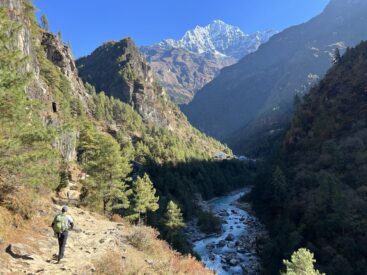
Leaving Phakding, the trail follows the Dudh Koshi valley and crosses several suspension bridges. You pass settlements such as Toktok and Bengkar, where clear weather may reveal views of Thamserku above the valley.
This part of the walk offers plenty to notice beyond the mountains: cultivated fields, prayer flags, chortens and the daily movement of residents, porters and pack animals. Keep to one side when animals pass, and avoid stopping in the middle of a narrow bridge to take photographs.
At Monjo, your guide will handle the required entry formalities for Sagarmatha National Park. From here, the trail enters the protected area and continues toward Jorsalle.
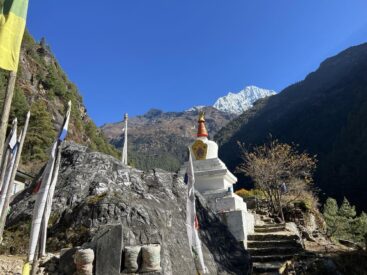
Jorsalle is a convenient place to stop for lunch before the main climb to Namche Bazaar. Once you leave the village, there are few places to buy food before reaching Namche, so this is a good opportunity to eat, refill your water and adjust your layers.
Beyond Jorsalle, the trail follows the river toward the meeting point of the Dudh Koshi and Bhote Koshi. The valley narrows, the bridges become higher, and the route begins to feel more dramatic.
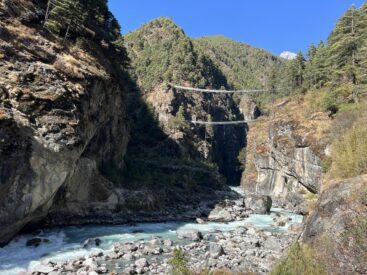
The high suspension bridge commonly known as Hillary Bridge is one of the most recognizable sights on the Everest Base Camp trail. Prayer flags line the bridge, while the rivers flow far below.
Pause where it is safe to admire the view, but keep moving while crossing so other trekkers and local residents can pass comfortably. After the bridge, the sustained uphill walk to Namche begins.
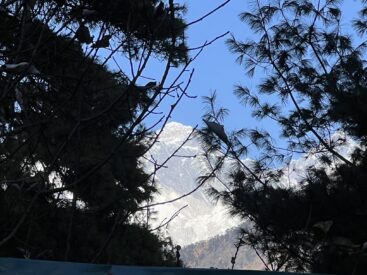
The path climbs through pine and rhododendron forest in a series of uphill stretches. Walk at a steady pace and take short breaks when needed. The ascent is often the most demanding part of Day 2, particularly as you approach 3,000 metres and above.
On a clear day, a viewpoint along this section may offer your first glimpse of Mount Everest between the surrounding peaks. Clouds can hide the mountain, so consider the view a welcome surprise rather than a guarantee. There are many more opportunities to see Everest later in the trek.
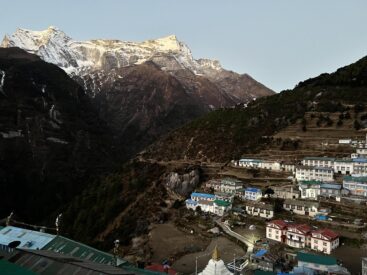
Namche Bazaar is built into a hillside and is the main service centre of the Khumbu region. Its streets are lined with trekking lodges, shops, cafés and bakeries. After checking into your lodge, you may have time for a gentle walk around town or simply a rest before dinner.
Namche is higher than Phakding, so pay attention to how you feel. Drink water regularly and tell your guide about a headache, nausea, unusual tiredness or any other symptoms. Your next day is spent sleeping at the same altitude while taking an acclimatization walk, which helps prepare you for the higher stages of the trek.
From the river crossings and Sherpa villages to the climb above Hillary Bridge, Day 2 gives you a fuller sense of the landscape and effort involved in reaching Everest Base Camp.
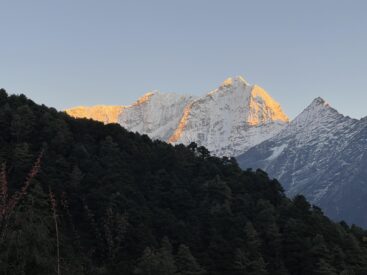
Continue reading: Day 3 of the Everest Base Camp Trek: Acclimatization in Namche Bazaar
Planning the full journey? See our 14-day Everest Base Camp Trek or contact Vista Trek about your preferred travel dates.

Once is not Enough for Naturally Nepal
GPO Box 9668
Thamel, Kathmandu, Nepal
Tel: 977-01-4701020,
4701164
info@vistatreks.com, vistatreknepal@gmail.com
Devendra Basnet
(Managing Director)
info@vistatreks.com
Arjun Kumar Sharma
(Executive Director)
vistatreknepal@gmail.com
Copyright © 2026 Vista Trek Pvt. Ltd. All Rights Reserved | Design by: Web Design in Nepal