

Trip Facts
- Duration 15 Days
- Start FromKathmandu
- Group Size1-10 Pax
- End FromKathmandu
- Trip GradeModerate to Strenuous
- Max Height 5160 m
- AccommodationTea House
- TransportationJeep/Bus
Best Season
Sept – Nov, March – May
Trip Highlights
- Less Crowded Natural Trek in Manaslu Region
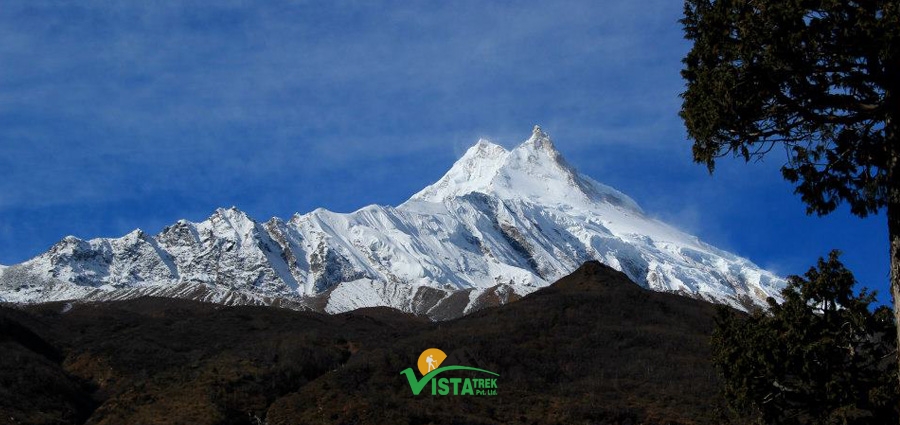
- Enjoy the views of the Manaslu and Shringi Himal ranges
- Nature delights in numerous towering waterfalls.
- Trek through the settlements of Tibetan and Nubri communities
- Cross the difficult Larkya La Pass (5160m)
Trip Overview
The 15-day Manaslu Circuit Trek takes you from the green valleys of the Budhi Gandaki River to the high mountain landscapes beneath Mount Manaslu. Along the way, you cross suspension bridges, walk through forests and traditional villages, and experience the culture of the Nubri communities before crossing Larkya La Pass.
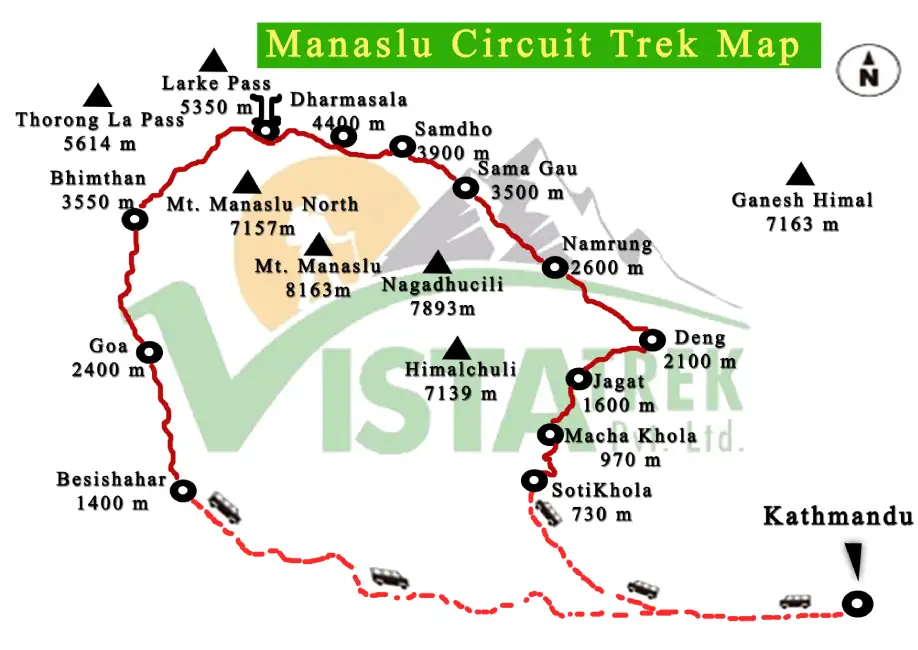
Your journey begins in Kathmandu with time to prepare and arrange the required permits. A drive takes you to Machha Khola, where the trek starts. Following the Budhi Gandaki valley, you walk through Jagat, Deng and Namrung as the scenery gradually changes from subtropical hillsides to alpine terrain. Mountain views become more prominent around Lho and Shyala on the approach to Samagaun.
An acclimatization day in Samagaun gives you time to rest and explore according to your energy and the weather. You can take a shorter walk towards Birendra Lake or discuss a more demanding hike with your guide. The route then continues through Samdo to Dharamsala, the last overnight stop before Larkya La.
Crossing the pass is the longest and most demanding day of the trek. You start early, climb steadily through high-altitude terrain and descend to Bimthang. From there, the trail returns to forests and villages before you travel via Dharapani and Besisahar to Kathmandu.
This itinerary includes an acclimatization day at Samagaun and a preparation day in Kathmandu. It is best suited to trekkers with good fitness who are comfortable with long walking days and basic mountain lodges. Your licensed guide accompanies you on the trek, and Vista Trek arranges the required permits and logistics. Weather, trail and road conditions can affect the daily plan, especially around the pass and on the drives.
Why choose this trek?
- See Mount Manaslu and the surrounding Himalayan peaks from several points along the route.
- Follow the Budhi Gandaki valley through changing landscapes and traditional settlements.
- Experience the culture and hospitality of the Nubri region.
- Spend an acclimatization day in Samagaun before moving higher.
- Cross Larkya La Pass and descend into the Bimthang valley.
- Complete the circuit with a licensed local guide and arranged trekking permits.
Trip Itinerary
- Upon arrival at Tribhuwan Intl Airport in Kathmandu, a representative from Vista Trek waiting, well in time, to receive you, shall welcome you to this land of the towering Himalayas. Once reaching your hotel in a car from the airport, all you need to do is check in and enjoy the refreshment served.
- We then visit the Vista Trek office for discussion on trekking, introduction to the guide and porter and settlement of dues if any. Since you often still have some time left for a walk around Thamel, you can do so if you please.
- Today, We obtain special trekking permit of Manaslu Region. You can spend freely in Kathmandu doing some shopping for trekking or take a Sightseeing tour of Kathmandu city to observe some of the ancient town, temples and monasteries.
- Overnight at Hotel.
- Embarking on an early morning drive from Kathmandu, we board a local bus bound for Machhakhola. The nearly 9-hour journey takes us along the Trishuli River, meandering through settlements and offering intermittent glimpses of the majestic Himalayas to the North. Our route leads us northward to Arughat, passing through Dhading Besi and Salyantar. Despite the occasional bumps, the bus makes two guaranteed stops for breakfast and lunch, concluding its journey in Machhakhola. This small settlement, nestled along the Budi Gandaki, has gained popularity as a trailhead for the challenging Manaslu Trek, rivaling Sotikhola in recent times. Machhakhola offers increasing comfort in accommodation services, although attached bathrooms are not to be expected; however, showers are available.
- Machhakhola, dominated by Gurung influences, presents a clustered landscape, a stark contrast to the open expanse of Lapubeshi. Here, on the third day, we rest for the night, immersed in the unique charm of this Gurung settlement.
- After breakfast, we walk for nearly two hours to Tatopani. Passing through an uttis-bamboo forest, dense mostly but thinner at places, the first two hours or so to Khorlabeshi is mostly flat with gradual uphills at places. This forest is home to many animals including the black-face-white-fur Langoors, white-on-the-tail but brown-overall deer as well as the kalij pheasant, the ones we are very likely to encounter. The trail also happens to run along the banks of Budi Gandaki with no roads in view. Arrival in Khorlabeshi and it’s time for a tea break. The next hour and a half’s walk on a similar route and we reach Tatopani, our stopover for lunch. Hot springs with only showers for now are what keep many indulged for some time.
- After our time in Tatopani, we walk again for nearly two hours to Dovan. Up a comfortable uphill and through a landscape similar to the ones before, the route now reaches Dovan, a small village with only a few constructions. One highlight of this small village is a primary school, where children from other villages nearby such as Ueeye, which is about two hours’ uphill even for the trained legs of the locals, come to attend classes.
- We walk again for the next two hours to Jagat. The trail, mostly flat with short uphills at places, is located in a place where the weather is cooler than before. The forest now gradually becomes thinner and thinner. Jagat, a big village on the banks of Budi Gandiki, also happens to be the check-point for permits.
- We spend the night here.
- After breakfast, we walk for around two and a half hours to Philim. The route from here on is first an hour of almost flat trail to Salleri, then a gradual uphill. With the gradual loss of forest in the area, the path turns steep for the next half an hour or so before finally leading to Philim, surrounded by big hills and relatively open. The infrastructure also includes a high school, some clinics and a helipad. It is not only the coolness that attracts many but also the view of Mt Siringi close in front to the North. We stop for Tea here.
- After a Tea break, we walk for about 3 hours to Pewa. Mostly straight, the route chooses to turn left for this journey to Dang and leaving the oneon the right that goes to Tsum Valley.The forest re-emerges once again and slowly becomes dense. Pewa, with only two service providers for trekkers, is our stopover for lunch at a riverside restaurant.
- After lunch, we walk again for around two and a half hours to Deng. This gradual uphill easy on the legs sees the forest very gradually thinning out, changing to a pretty terrain after around 2 hours. Deng is a small village of only around a dozen structures. Providing basic accommodation facilities such as a normal hotel or a lodge with showers, the place exhibits noticeable change in cultural practices, now with a distinct Tibetan feel which continues from here on.
- After breakfast, we leave Deng and follow the trail through forests and small villages, crossing the Budhi Gandaki and climbing steadily towards Namrung. The route includes some steep sections, so we walk at a comfortable pace and stop for lunch along the way.
- As we gain altitude, the landscape and villages begin to reflect the Tibetan-influenced culture of the Nubri Valley. We arrive in Namrung after approximately 5–6 hours of walking.
- We spend the night in a local lodge in Namrung.
- After breakfast, we leave Namrung and walk through forests and farming villages towards Lho. As we gain altitude, the valley opens up and we begin to enjoy views of the surrounding Himalayan peaks, including Mount Manaslu when the weather is clear. We pass through Lhi and continue to Lho, where we stop for lunch.
- After lunch, we follow the trail through Shyala, which offers impressive views of the Manaslu range. From there, we continue to Samagaun, a village beneath Mount Manaslu. The walk from Namrung to Samagaun takes approximately 6–7 hours, depending on our pace and stops.
- We spend the night in a local lodge in Samagaun.
- A walk around the village, an inspection into the local way of animal husbandry dominated by yaks, some shoppingof local goods and an hour’s hike to the Birendra Lake fed by the Manaslu glacier are the activities favoured by most resting for acclimatization here.
- For those interested as well as physically very fit and after a day of acclimatization, a grueling climb of 5 hours to the Manaslu Base Camp (5,400 metres) with a steep downhill for 3 hours as the walk back is what comes as one more challenge to test their endurance. As there aren’t any settlements on the way, this venture requires those willing to carry everything including food and water. This is an adventure with risks and sees a rapiddecline in vegetation the way up. Once in MBC, it is the Manaslu Glacier and the Manaslu Peakare what attract attention. This addition, however, calls for one more rest day.
- After breakfast, we walk the whole way to Samdhu. With no settlements on the way, theslight uphill, a lot easier on the legs, turns steep in its final 20 minutes or so.After about half an hour,most of the mountains slowly disappear from sight as Pangbuche Peak takes over.The vegetation too becomes alpine, with only shrubs and grasses. Samdhu, a village with slightly more than a hundred households, is a place where potatoes are one of the only few produce possible in the area. After lunch, the very strong also choose to walk to the viewpoint from the top of the Samdhu hill, a walk of around three hours up a very steep uphill.
- Spend the night here.
- After breakfast, we walk all the way to Dharmashala. Along bare hills and towards rocky elevations, the route is a mix of steep and gradual uphills. Dharmashala, a stopover with only one construction that accommodates 35 people, is where we stop for lunch as well as for the night. The place also comeswith dormitory-style big tents, which often feels warmer than the rooms and accommodates 120 people maximum in peak season.For some, the thinning of the air now starts taking its toll.
- Spend the night here.
- Early morning, before 5 am, we start walking for about four and a half hours to Larke Pass.We start off with a cup of tea or coffee along with a bowl of hot soup.Starting early allows people to avoid the fierce cold wind once in the Pass.Although the route, a combination of some steep and gradual climbs, is a relief for many, the altitude makes things difficult, affecting even the appetite in many.As the landscape turns more barren and rocks and their debris take over, only a few mosses and lichens are able to continue the struggle for existence.Once atop the Pass, the abundance of prayer flags indicates the respect people hold for the place.It takes about half an hour to cross the Pass, which is also the border that enters Manang District.
- After crossing the Pass, a long gradual downhill awaits everyone.After half an hour, Larke Peak closes in, Pongkir Peak and the top of Annapurna I are the ones to follow, further down half an hour, Pongkir Lake joins the view. We have our lunch here. With the landscape now allowing some vegetation,the route enters Bhimthan, a stopover specially designed for trekkers and now has around 60-65 hotels. Theview the place offers is the East Manaslu Range to the right. Naike Peak to the South and Hiunalchuli Range to the North.
- Spend the night here.
- After breakfast, we walk for about almost 4 hours to Surki. With very narrow footpaths on edges at places, the trail walks us through a big forest down a gradual decline with Mt Manaslu to the left.Surki is a small village with around only half a dozen houses, now also serves through its teahouses, highlighting the impact of tourism on economic activities even in the remote parts of the world;
- From Surki, it’s two hours more to Goa. The route is similar to the one previous; but the forest slowly becomes thinner as human settlements encroach land for their purposes.The view therefore changes with the landscapenow filled with farmlands of maze or wheat or potatoes and clustered houses. Goa, a relatively new settlement with 50-60 constructions encouraged by trekking to add necessary value, is situated on an ideal location as a view point for the whole Manaslu Range.In the past, Tiliche and Dharapani were the two most preferred stopovers.
- After breakfast, we walk for about 3 hours to Dharapani. A downhill easy on the legs, the way walks everyone through either hills with grasses, shrubs and sparsely populated trees or farmlands or villages; Dharapani, on the highway to Manang, is our stopover for lunch. Entering the Annapurna Conservation Area from Manaslu Conservation Area againrequires a permit; and this is the check-point.
- After lunch, we head off to Beshisahar on a local transportation. Beshisahar, a small town with Gurung dominance, has grown in popularity as a trailhead for Annapurna Circuit Trek since the 1990s.
- Spend the night in Beshisahar.
- We head off to Kathmandu on a local bus early morning. Along the banks of the famous Trishuli and Marshyndi river, this almost 6-hour journey takes all its passengers on a ride, albeit with some bumps here and there, through numerous important settlements. With guaranteed two stops for breakfast and lunch, the bus ride comes to its final stop in Kathmandu.
- In the evening, allow us the pleasure of your company during the fare-well dinner organized by Vista Trek.
- Spend the night in a hotel.
- If you have a morning flight, we leave for Tribhuwan Intl Airport early morning in a car arranged by thecompany.
- If your flight is in the late afternoon or evening, only your WILL shall dictate your involvement or indulgence as you may please before leaving for Tribhuwan Intl Airport in the vehicle.
Cost Includes
- Pick up and transfer by car from Airport-Hotel-Airport.
- 3 nights standard hotel accommodation.
- Breakfast, lunch and dinner during the trek.
- Local lodges accommodation during the trek.
- Government licensed guide,plus experience porter ( including their food, salary, accommodation, equipment, medicine & insurance).
- All local transportation by bus as per the itinerary.(Jeep driving from Dharapani to Besisahar, and bus from Besisahar -kathmandu)
- All necessary permits and entry fees including Trekking permit to Manaslu.
- Medical kit box.
- Rescue assistance.
- All government taxes.
- Necessary equipment (sleeping bags, down jackets etc. if needed).
- Our service charge.
Cost Excludes
- Meals in Kathmandu.
- International airfare.
- Nepal entry visa fee ($40).
- Your travel insurance (should include your medical and rescue).
- Any personal expenses.
- Any kind of hot & Cold drinks
- Staff & driver tipping.
Trip Gallery
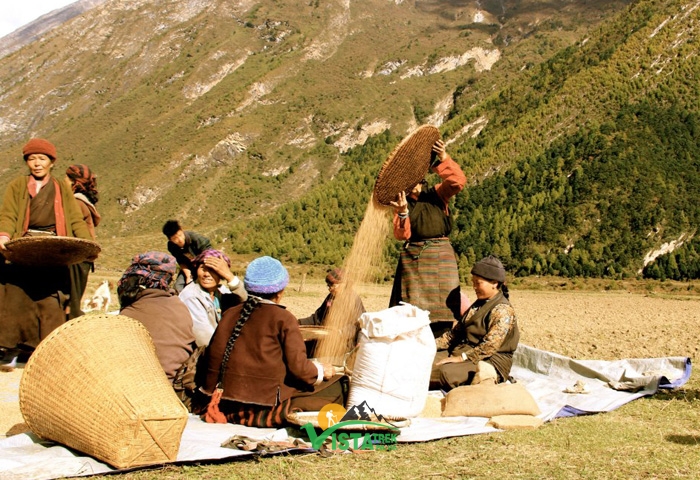
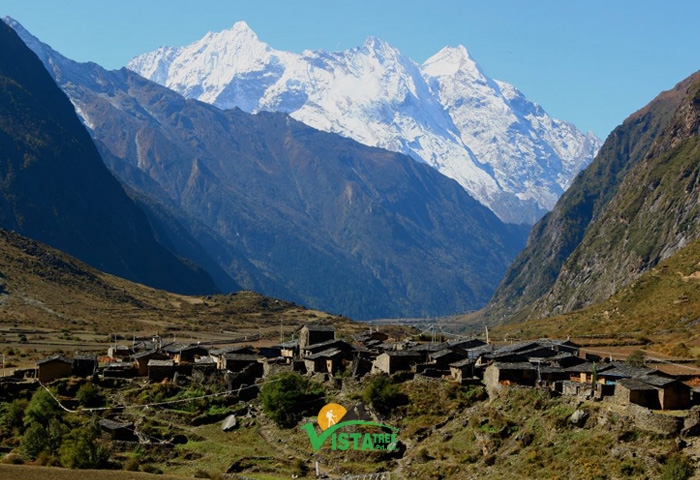
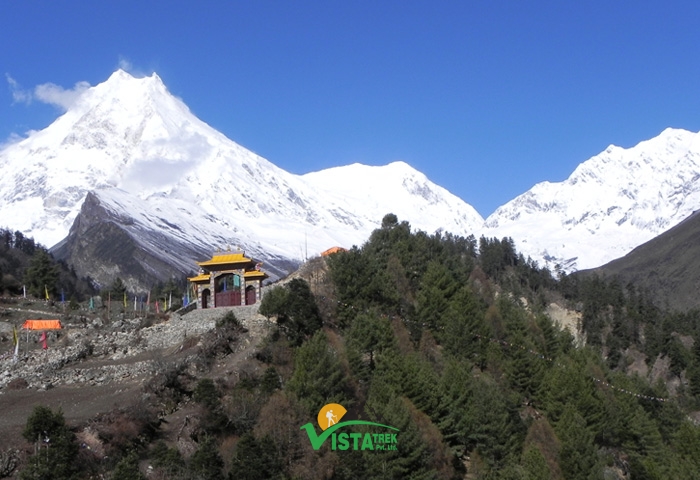
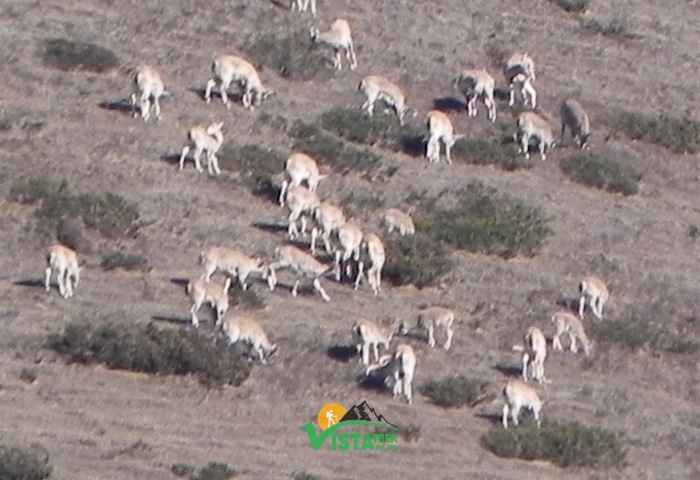
Trip Map
Useful Info
Difficulty and preparation
The Manaslu Circuit is a challenging high-altitude trek. Most walking days involve several hours on uneven trails, with climbs and descents. The Larkya La crossing is particularly long and may involve cold, wind, snow or icy ground.
Previous multiday trekking experience is helpful. Before your trip, build your fitness through regular hill walks, stairs or other endurance exercise while carrying the daypack you expect to use. No mountaineering or technical climbing experience is normally needed for the standard route, but your guide will assess conditions before the pass crossing.
Acclimatization and health
The itinerary includes a day in Samagaun to help you adjust to altitude. Walk at a comfortable pace, drink regularly and tell your guide promptly if you develop a headache, nausea, unusual fatigue or other symptoms. Do not continue higher if symptoms suggest altitude illness. Your guide may adjust the plan or arrange a descent when necessary.
If you have an existing medical condition, discuss the trek with a qualified healthcare professional before booking. Carry your personal medication and a copy of any relevant prescription.
Permits and guide
The standard route requires a Manaslu restricted-area trekking permit and conservation-area permits for Manaslu and Annapurna. Vista Trek arranges the permits specified in the package through the appropriate authorities. Please send the passport and other details requested for the application in good time.
The restricted-area permit must be arranged through an authorized trekking agency. Permit procedures can change, so we will confirm the current requirements when you book.
Accommodation
In Kathmandu, you stay in a standard hotel as specified in your booking. During the trek, accommodation is in local teahouses or lodges, generally in simple twin-sharing rooms. Bathrooms may be shared, and facilities become more basic at higher elevations. Dharamsala has particularly limited accommodation, so room arrangements there depend on availability and local conditions.
The published itinerary also includes an overnight stay in Besisahar. Please check the final accommodation list before booking, since the current inclusion section does not clearly describe every hotel night.
Meals and drinking water
Breakfast, lunch and dinner are included during the trekking portion according to the package inclusions. Lodges commonly serve dal bhat, soups, noodles, potatoes, eggs and other available dishes; the selection becomes smaller higher on the route. Breakfast in Kathmandu and meals outside the trek should be stated clearly in the final booking details.
Carry a reusable bottle and treat water before drinking it, or buy safe drinking water where available. Let us know about dietary needs in advance so we can advise what is practical along the route.
Guide, porter and luggage
A government-licensed guide leads the trek. According to the current page, one porter is provided for two trekkers, carrying approximately 15–20 kg in total for the pair. Keep your daily essentials—water, warm layers, rain protection, medication, snacks and valuables—in your own daypack. Please confirm the exact duffel allowance for your booking before departure.
What to pack
Bring broken-in trekking boots, warm base and insulating layers, a waterproof jacket and trousers, gloves, a warm hat, sun protection and a headlamp. Trekking poles are useful on the long descent from Larkya La. A warm sleeping bag, reusable water bottles, water treatment, personal medication and a power bank are also recommended.
Vista Trek should specify which equipment it lends, whether it is included in the price and whether any deposit applies. The current inclusions mention sleeping bags and down jackets “if needed,” but the terms are unclear.
Weather, roads and flexibility
Spring and autumn are the usual trekking seasons. Conditions still vary from year to year, particularly at the pass. Winter can bring severe cold and snow, while monsoon rain can affect trails and access roads.
The drives to Machha Khola and from Besisahar can be slow on mountain roads. Landslides, repairs, traffic or weather may require a different road or vehicle. Keep at least one or two spare days before your international departure where possible. Vista Trek will advise on the route and transport close to departure rather than promise a fixed driving time.
Travel insurance
Arrange insurance that covers trekking at the altitude reached on this itinerary, emergency medical treatment and helicopter evacuation where medically necessary. Confirm the altitude limit and exclusions directly with your insurer. Rescue assistance means helping to coordinate a response; rescue and medical charges remain subject to your insurance and the package terms.
Trip FAQ's
This package takes 15 days from arrival in Kathmandu to departure. It includes a preparation day in Kathmandu, an acclimatization day in Samagaun, the Larkya La crossing and the return journey via Besisahar.
The trek starts after the drive from Kathmandu to Machha Khola. Walking ends around Dharapani, followed by road travel through Besisahar back to Kathmandu. The exact road access can change with local conditions.
It is a challenging multiday trek because of the altitude, uneven trails and long pass-crossing day. Good fitness and preparation are important. Previous high-altitude trekking experience is helpful, though the route does not normally require technical climbing.
Yes. The Manaslu route passes through a restricted area, and the relevant trekking and conservation permits must be arranged. Vista Trek provides a licensed guide and arranges the permits included in your booking. Current application requirements will be confirmed before departure.
Yes. A single traveller can now obtain a Manaslu restricted-area permit, so you can book this trek without a trekking partner. Vista Trek can arrange a private trip with a licensed guide and the required permits. You will travel as the only client in your group, accompanied by your guide.
Spring and autumn are generally the preferred seasons. Conditions at Larkya La can change quickly even in these periods, so the guide’s assessment on the day is essential.
You stay in a hotel in Kathmandu and local lodges during the trek. Rooms and bathrooms are generally simple, especially at higher elevations. Accommodation at Dharamsala is limited and may involve shared facilities.
Yes. Day 8 is set aside in Samagaun. Your guide will recommend a suitable walk and help you decide how much activity is appropriate.
You have one acclimatization day in Samagaun. Depending on your fitness, how well you are adjusting to the altitude, and the weather, you can choose a demanding hike towards Manaslu Base Camp, a hike to Pungen Monastery, or an easier walk around Samagaun and up to Birendra Lake. Your guide will help you choose the most suitable option on the day.
The current package lists breakfast, lunch and dinner during the trek. It excludes meals in Kathmandu. Ask Vista Trek to confirm meals during the Besisahar stay and both travel days in the final itinerary.
A porter can carry up to 20 kg. For two trekkers, we provide one porter, so each guest has a 10 kg luggage allowance. If you are travelling alone, your porter can carry up to 20 kg of your luggage. Please carry your water, warm layers, medication and other daily essentials in your own daypack.
Your guide will assess the conditions and discuss the safest available option with you. That may involve waiting, changing the itinerary or turning back. Any additional costs and refund terms should be explained before departure.
Choose a policy that explicitly covers high-altitude trekking, medical treatment and emergency evacuation at the maximum altitude of your itinerary. Check the policy wording with your insurer before travelling.